Metaphor ReFantazio Post Mortem
12 August 2026
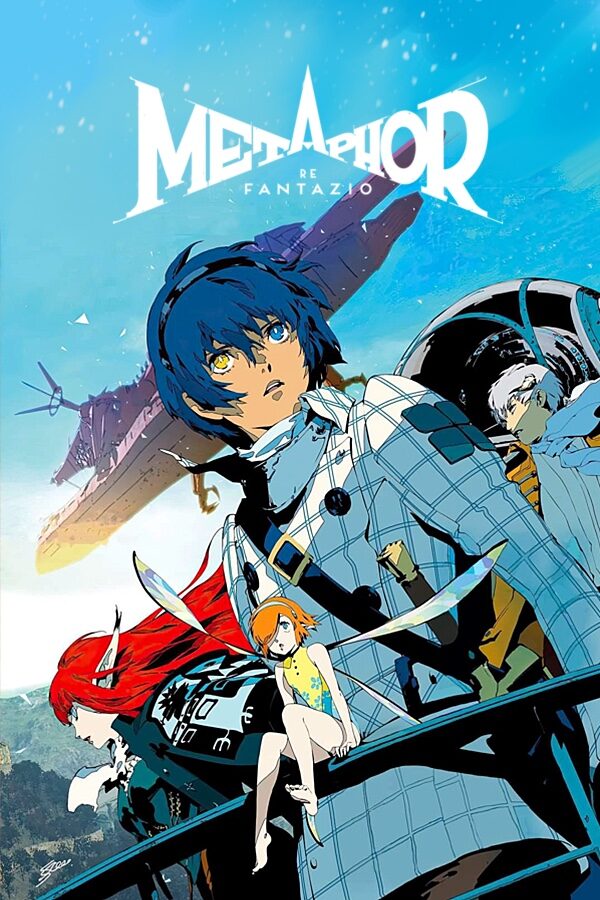 completed
Battered and bruised, I've fought my way through his final dungeon and beaten all the traps to make it here. Beyond this door lies Louis for the final confrontation before time expires. I steel my party for the coming battle, burning precious, rare consumables to patch wounds and replenish mana. Now ready for the worst, I enter the final stage.
Metaphor ReFantazio is a game I liked for the vast majority of the run time. Most of the game has something to say and where it commits to that it succeeds.
Let's take a look at the systems. Metaphor looks at the lineage it comes from, Persona, and makes the mechanics clearer, more immediately legible, and they're better for it. The archetype system is a welcome change from the confusion of the Velvet Room. We've traded throwing things into the guillotine blender, fingers crossed, for a system that is vast and deep, but crystal clear. It's easy to understand how to build your characters and there's a lot of freedom in doing so. And that's right, characters, since the whole party gets in on the Archetype system which makes them more flexible and more a part of the team, not some tagalong following our chosen one leader. You can play who you like instead of saying "Sorry Ann, this one's fire immune, enjoy the bench!"
The game trusts you to be able to navigate this system and it feels rewarding and empowering, right up until the Royal Archetypes where it puts its thumb on the scale: THIS is how the character is meant to be played.
The calendar and social game are less opaque too, the game largely respects your desire to plan and doesn't interrupt your days with random events, throwing your carefully sculpted social calendar into disarray. There are also fewer pitfalls and dead ends, it's easier to see what's worth doing and what needs to be done, to the point where I easily maxed out confidants and stats with days to spare.
Combat is faster and more rewarding. The ability to rewind combat doesn't penalize you for wasting turns learning enemy weaknesses and the big new addition, overworld combat, adds another dimension of mastery. You learn the mob's pattern, you dodge, you go in for the kill, and you're rewarded with a sweet stun round of combat to get the edge. Failure has real teeth too, get hit and you're the one on the back foot. When creatures become too weak to stand toe to toe in turn based combat, they're easily dispatched in overworld combat, a transition point that marks a real milestone and growth for the player as they progress in dungeons.
Mechanically this game is clearer, trusts the player more, and generally follows through on that. The story itself has a clear message it wants to send: the power of dreams and story, of democracy, that people of humble beginnings can change the world, for better or for worse. Spoilers abound below.
Our cast is mostly a bunch of nobodies and castoffs ranging from a noble with nothing to show for it but the title to a pagan priestess in a land that calls her a heretic. Our main character is even worse than nothing, a despised Elda. Metaphor says that stories can give people a common dream and when united with that hope that anyone can make a difference. Unfortunately, it immediately weakens that argument by making the main character the prince: the opposite of a nobody in a succession war.
To be fair, even he didn't know that at the time.
Nowhere is this more obvious or tragic than Maria's story. She starts as a character in a similar spot to the main character and can look to him as a role model. The main character says "I am nothing and nobody respects me, but I'm doing my best to make a difference and you should too." She believes this and does the best a little girl can in her position. And then the prince revelation says "Sorry Maria, all your dreams are nice, but you need someone with power and legitimacy to actually do it." We get the little kid at the ending of The Last Jedi and then the Rey Palpatine reveal, immediately undercutting the message.
I already understand Metaphor's counter argument: while the main character drives the action they're just a messenger, a vessel for the story, a way for it to work in the real world. A story can inspire those with power, and the story can come from anywhere. That it's the true force of change in the world.
And then More turns out to be the king. So even the dreams have to come from the right person. It's elite inspiring elites and we need to wait for our benevolent leaders to show us the right way. It's an odd flavor of great man theory.
Maybe their defense is that the game shows the power of democracy. Even if the dreams come from elites and have to be enacted by elites, they still had to win the hearts of the people. But the game doesn't really have a firm commitment to the democratic process, I mean, the other leading candidates are killed. Our prince isn't really the chosen one so much as the only one remaining. The main character never makes a commitment to enduring democracy either, it's right back to the status quo.
The other candidates aren't taken seriously, one's platform is to keep the kingdom in a constant state of inebriation, another is really just doing it because it's good advertising for her business. No, in order to be taken seriously, you have to come from institutional power, the royal lineage, the military, or the church.
The final thing Metaphor tries to talk about is the power of demagoguery and its ability to channel our anxieties into their own power. In the world of Metaphor this is literal, magla is formed by the anxieties of people.
Our charismatic strongman is Louis, a decorated general who pulls people into his orbit with his promises of equality. We see how desperate people would accept him as a savior and his offer to totally upend the system. The current game is rigged against the people, so flipping the table at least evens the odds even if it's not a guarantee of a better life. This makes him a delightfully compelling and realistic villain due to gestures at everything happening.
We as the players (through the characters) know this is a bad bargain, his ideal world where the strong prevail and everyone pulls themselves up by their own bootstraps is not better, in fact it's calamitous and leads to undue suffering. Some of our best characters realize this (Del and Basilio) and come to our side.
And then Louis turns out to be a three headed demonic monster who literally eats people for power in his quest to see it all burn, not just the systems but the people. Everyone deserves to die, they're all (literally) monsters on the inside anyways. This lets Louis's ideology off the hook, maybe his ideas were fine, any policy goals would be bad and compromised if Dracula was espousing them!
The plot definitely has interesting things to say: it pokes at how racism and anxiety can impact democracy and the value of story and communicating a dream in combating that. I think that's legitimately cool and worth thinking about. The bones of something truly great are here, I just wish the game had the conviction to actually land it instead of weakening the message by choosing twists and spectacle at the Elda Village and Skybound Avatar. It's another Atlus game with this pattern and I'm not sure if they don't understand that or they're pulling punches to chase dollars. It's disappointing to get this close and just back away from it at the end.
Louis has been going on with his genre obligated monologue for some time and I'm ready to end this, to bring this 80 hour campaign to a close here in the throne room of the Skybound Avatar. What other ending could be more fitting, surely everything has been leading to this. And then Louis finishes with:
"Your battle is in another castle."
I'm left alone, emptied bottles of consumables rolling around at my feet. The battle they were spent for was never really there to begin with.